Mike Cloud: Suitcase Portraits (Works)
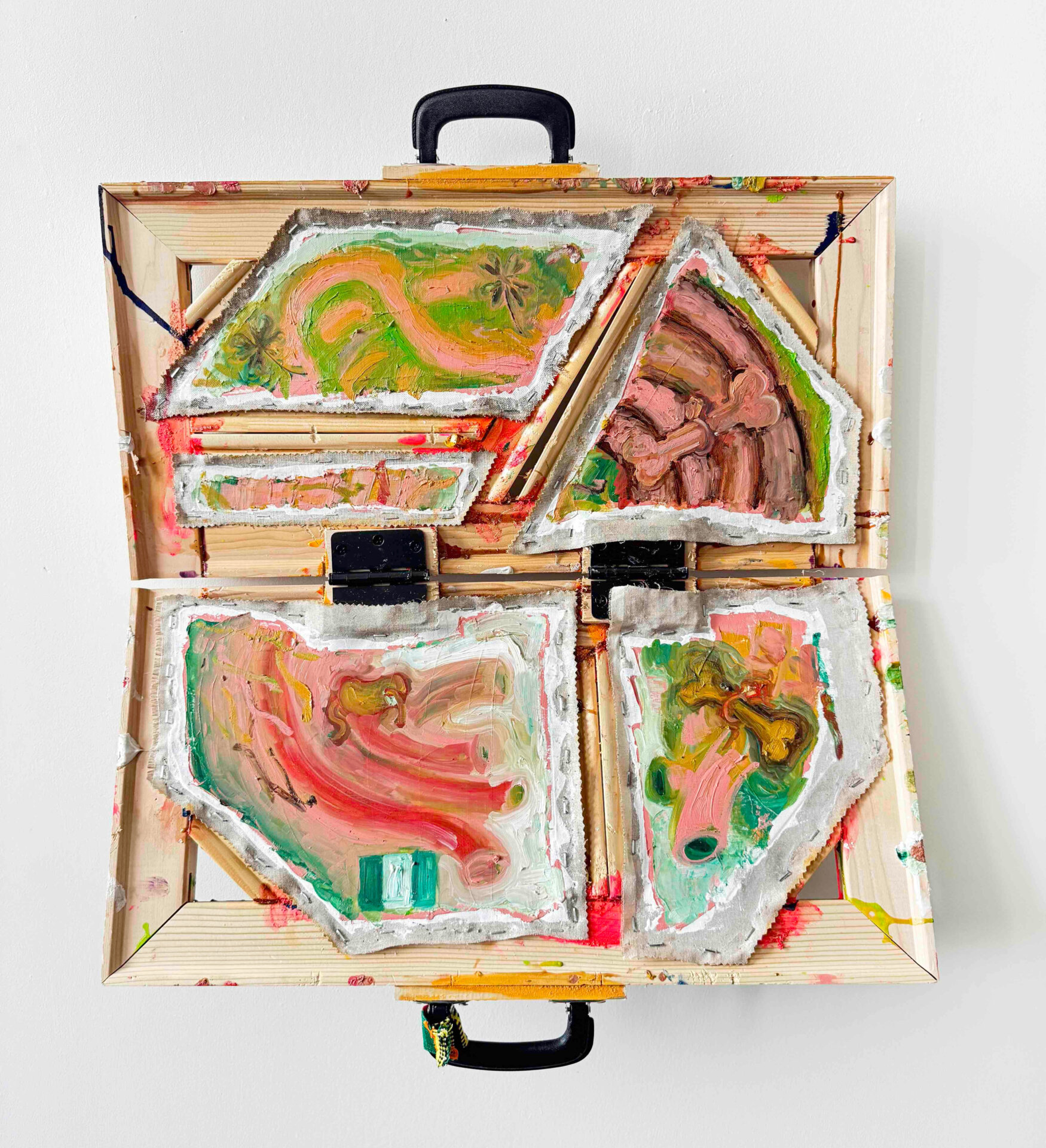
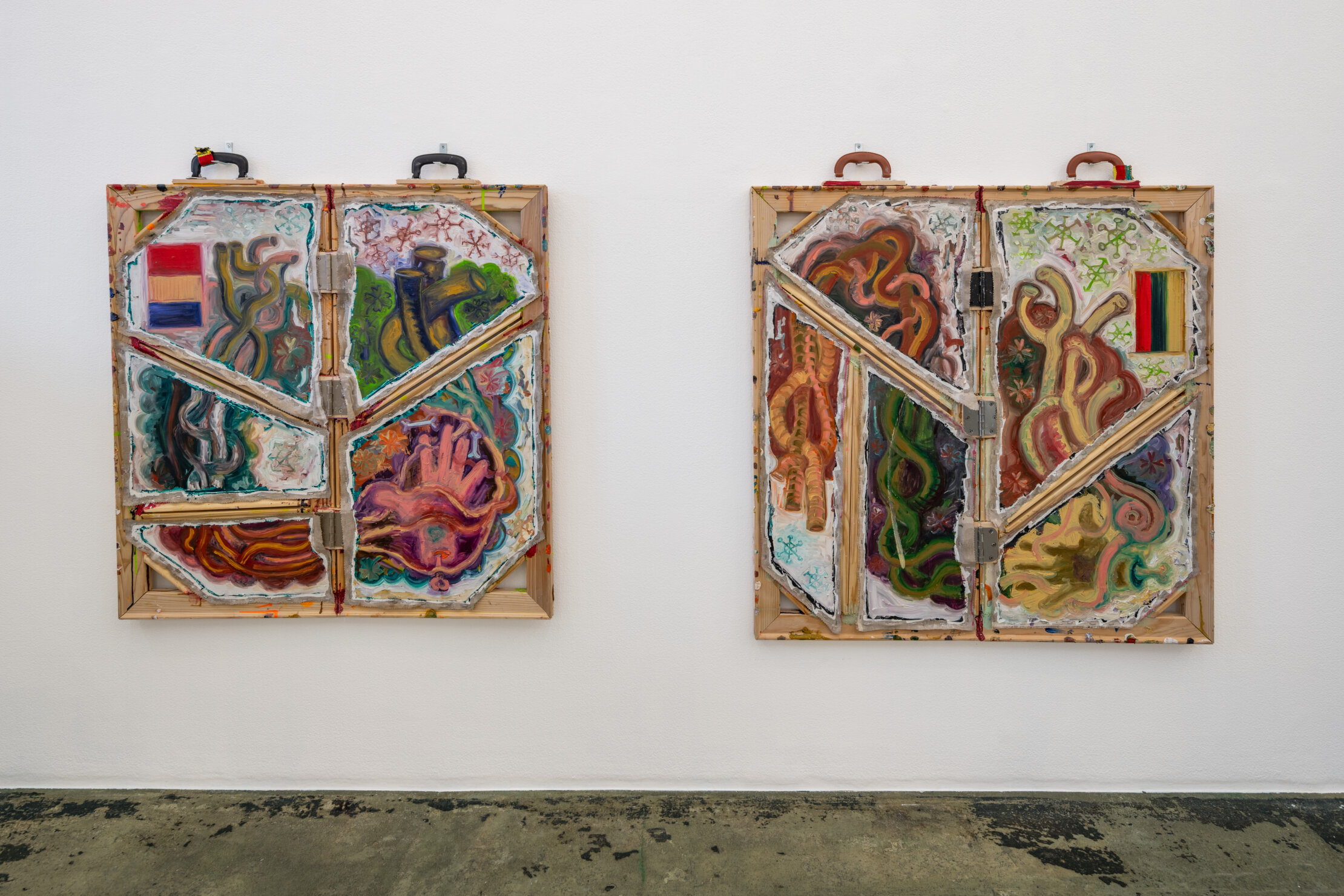
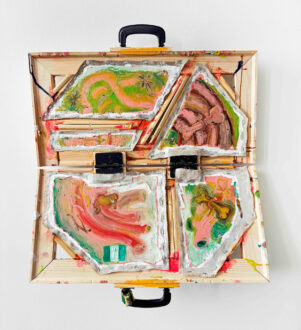 Unidentified Suitcase Portrait, Nigeria, 2026.
Oil on linen with stretcher bars and hardware
24 x 24in. open (12 x 24in. closed) ">
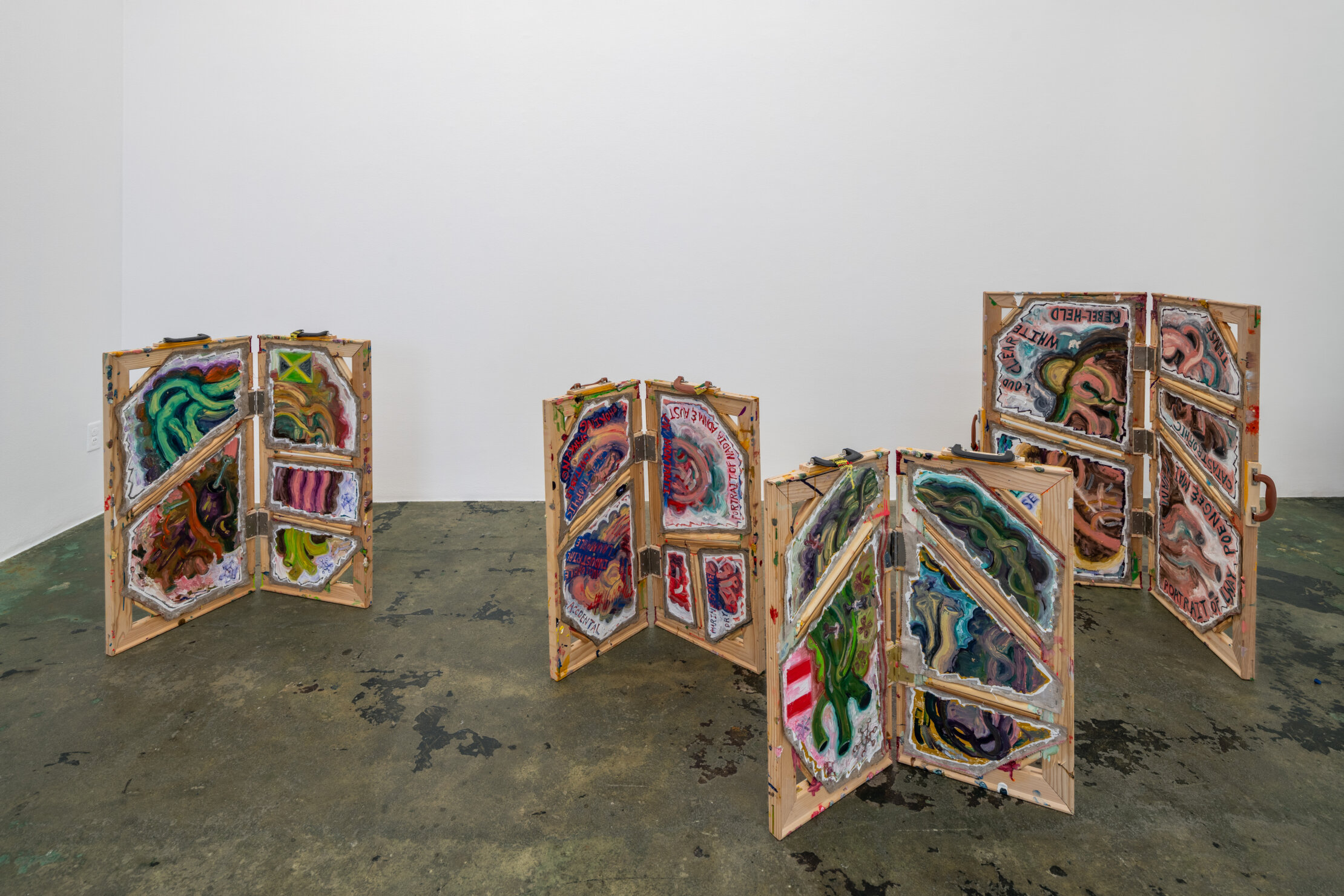
Unidentified Suitcase Portrait, Nigeria, 2026.
Oil on linen with stretcher bars and hardware
24 x 24in. open (12 x 24in. closed) ">
Selected Works
Mike Cloud
Mike Cloud: Suitcase Portraits
September 17 – October 24, 2026
Opens Thursday, September 17, 6 – 8:30 p.m.
Mike Cloud: Suitcase Portraits Press Release
A public conversation between Peter Halley and Mike Cloud will take place on Friday, September 18, starting at 6 p.m. Halley and Cloud will discuss historian and critic Yve-Alain Bois’ seminal 1986 essay Painting: The Task of Mourning on abstraction and the death of painting.
Thomas Erben is proud to present Mike Cloud’s Suitcase Portraits, the artist’s ninth exhibition with the gallery (solo presentations at The Independent, Art Basel Miami Beach and Frieze London included). This confounding group of new works goes on view coinciding with Cloud’s solo exhibitions Hammer Projects: Mike Cloud at the Hammer Museum, Los Angeles, and Mike Cloud: Worldless Obstruction at the Museum of Contemporary Art, Chicago (until January and February 2027, respectively).
Investing the macabre with painterly care and referring to crime and commodification within a quasi-devotional format, in Suitcase Portraits, Cloud continues to delve into the complexities of human suffering, victimhood and the possibility of creating a space for empathic encounter.
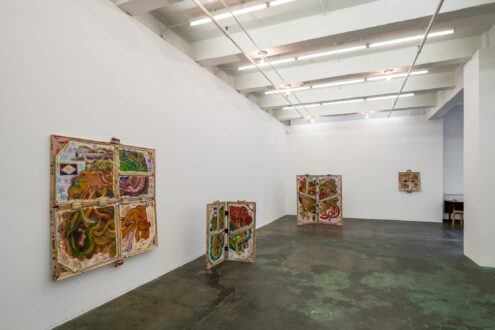
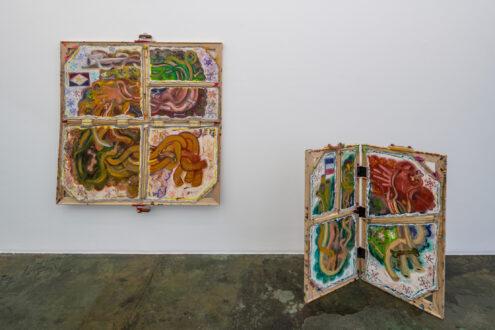
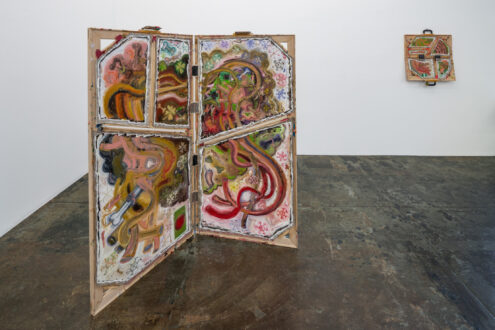
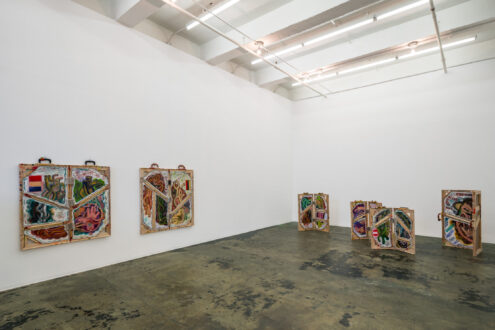
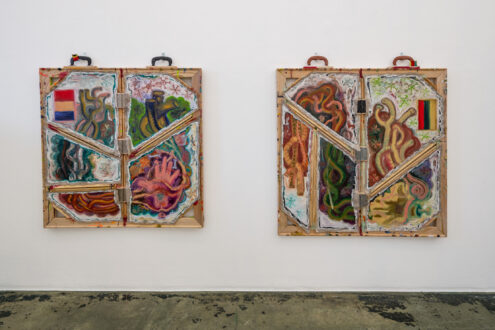
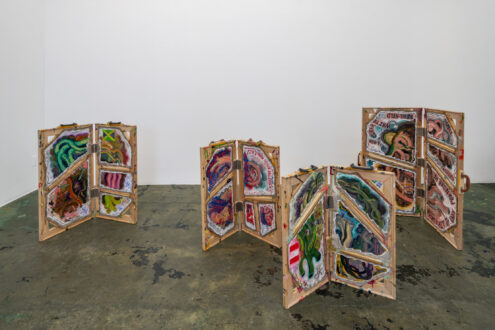
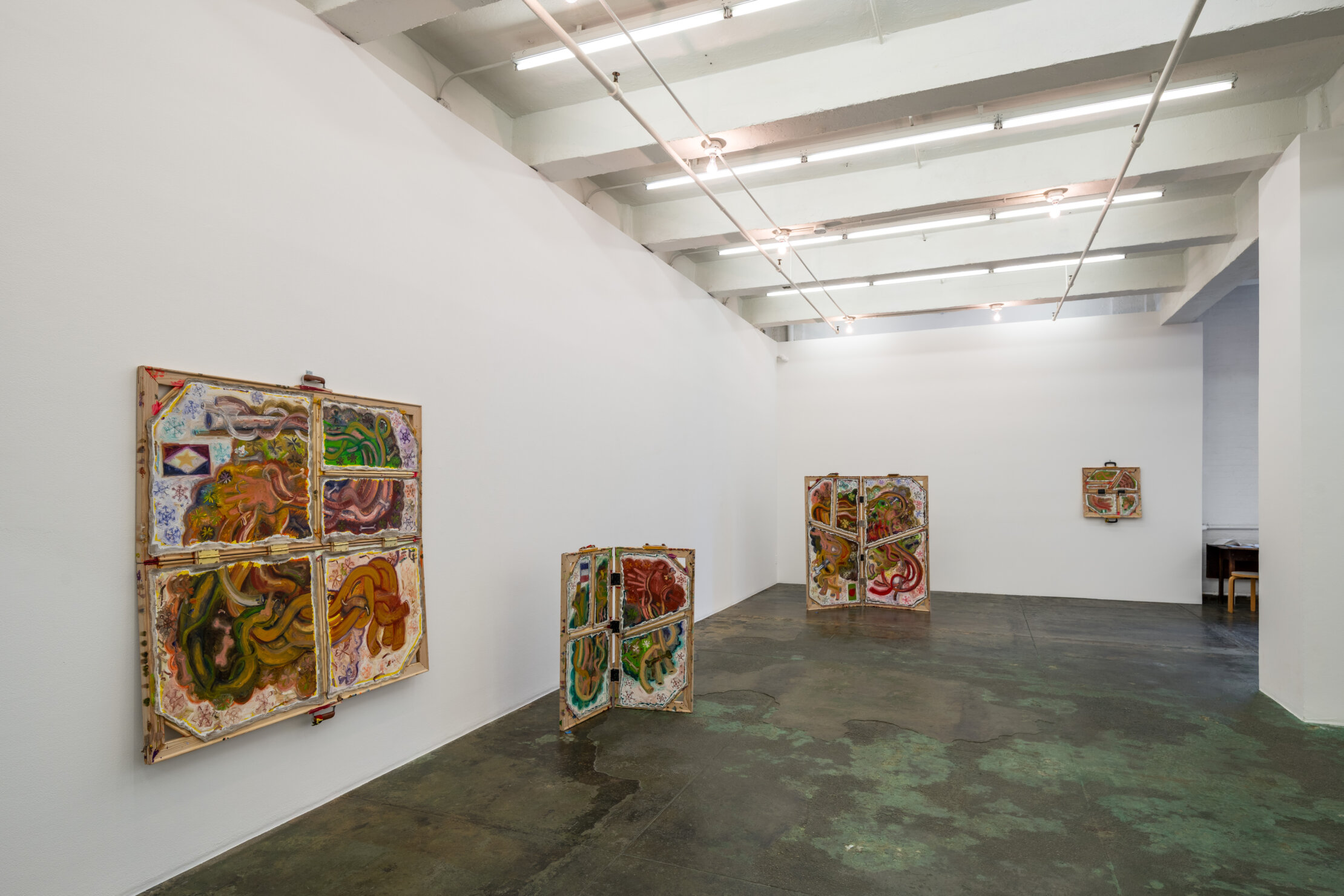
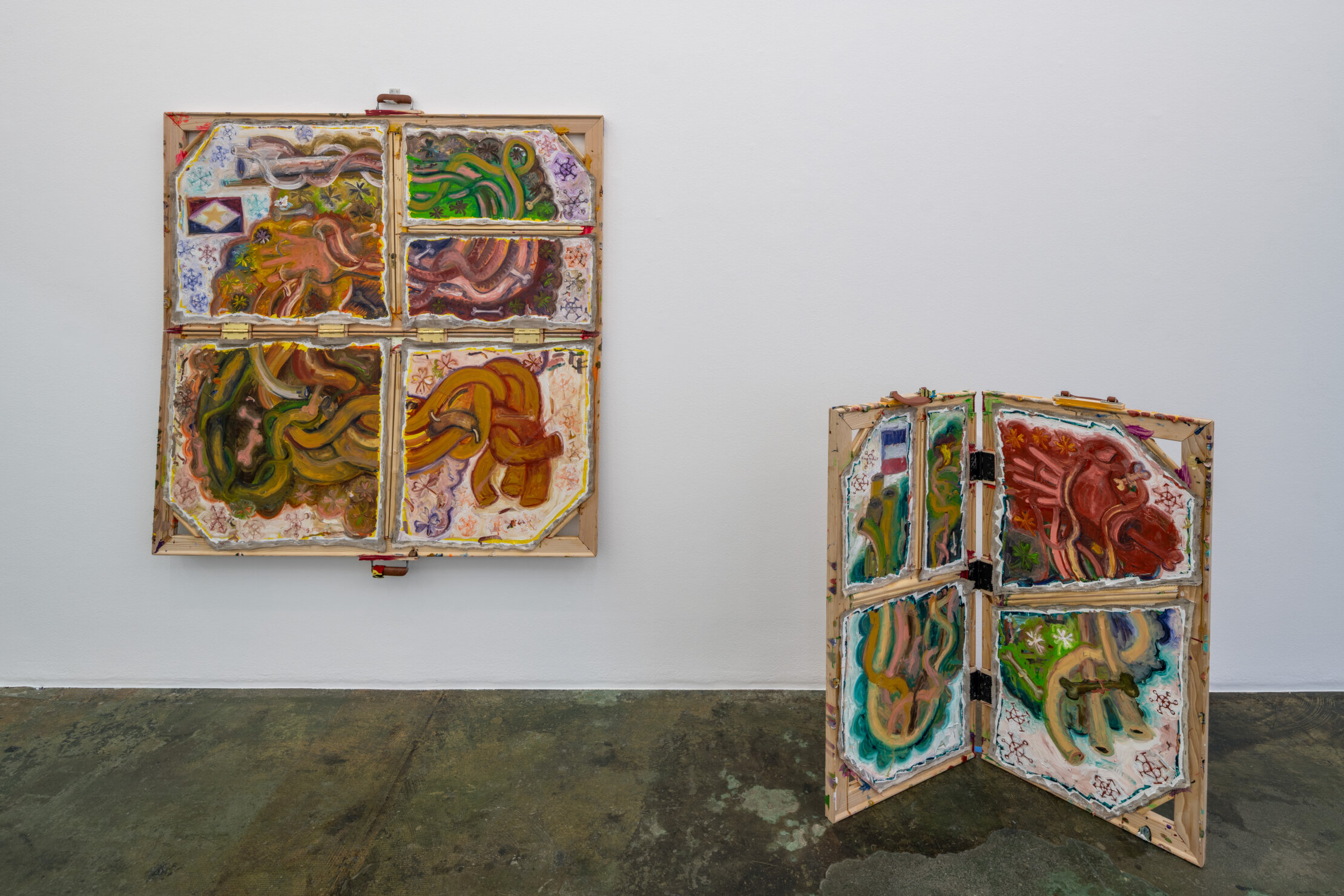
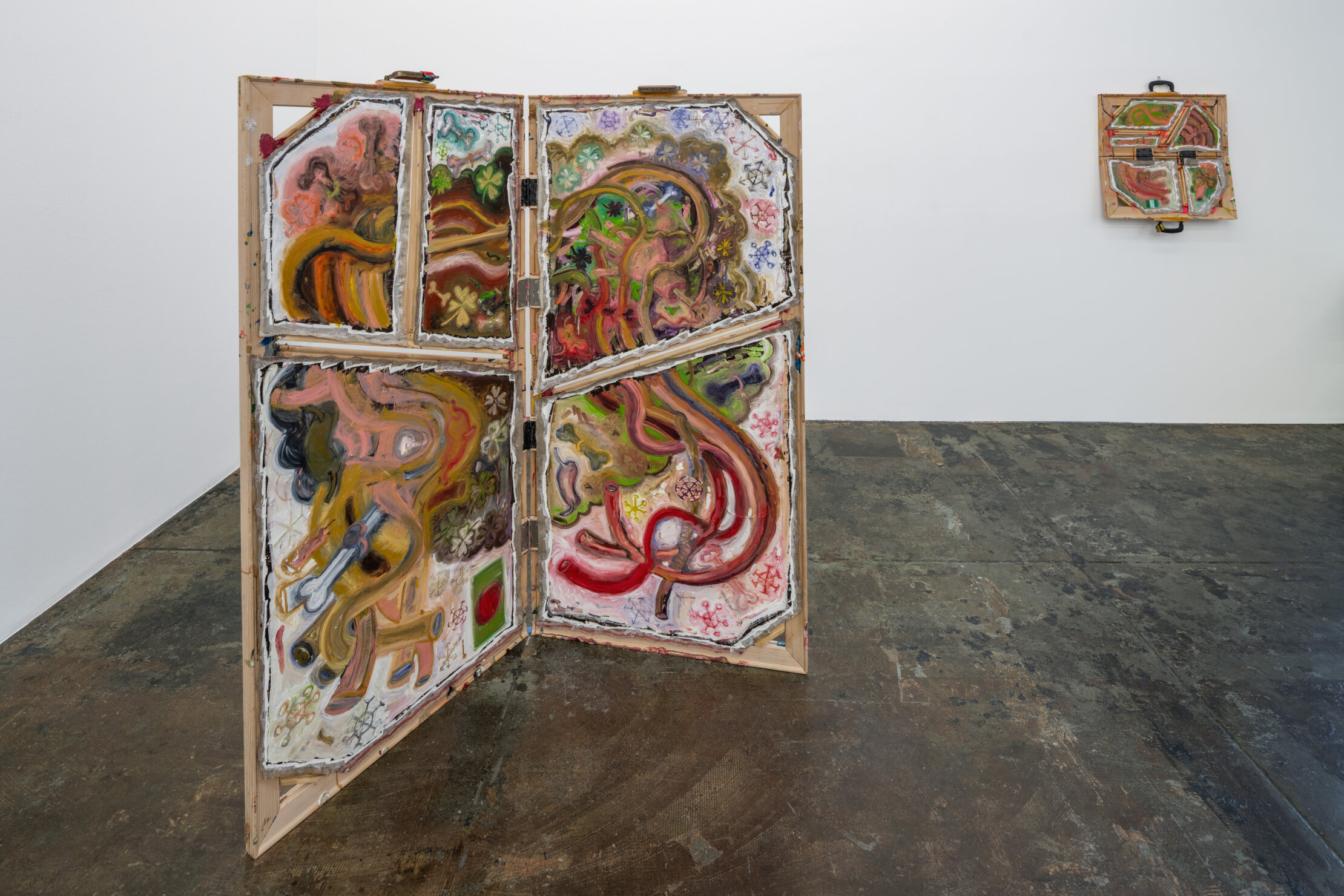
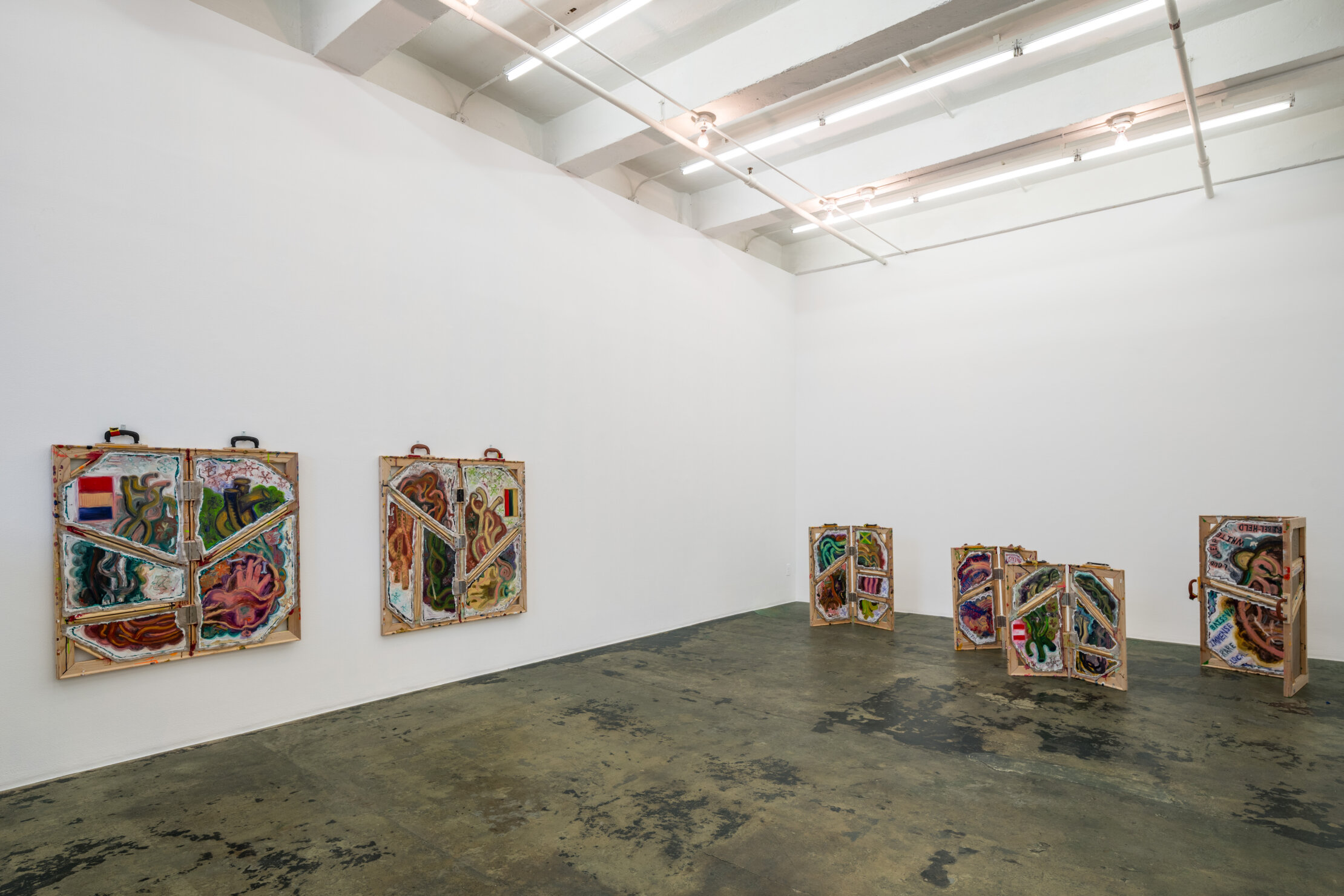
Removed is Cloud’s familiar repertoire of shaped canvases and inscribed URL references to persons or events. The artist’s signature use of structural stretcher bars—brought to the surface of his paintings—is reconfigured into a series of suitcases. Equipped with store-bought handles, the paintings range from 60 x 60 to 24 x 24 (inches, open), fold in half and are placed open or closed in any direction on the wall or freestanding on the floor. Each painting contains an abstract, unidentified portrait.
What continues in this body of new work is Cloud’s interest in the relationship between painting and death, invoked here by the arrangement of renderings of human parts found in suitcases around the world with titles referring to Nigeria, Bangladesh or France. Rather than being tied to specific, newsworthy events, these paintings are “speculative portraitures of an anonymous global crime wave”. The violence of bodily dissection, arrangement and concealment is reflected in the segmented, closeable surfaces each containing loose renderings—cartoonish near-abstractions of organs, rips, bones or other viscera.
Cloud adds forensic traces: jewelry, flags, faded tattoos, which hint at a third subject intruding upon the intimacy of the viewer’s experience, circling us back to the social conditions of our contemporary environment. This mise-en-scène evokes the presentation of relics whereas the handles refer to their transportation and commercialization customary in medieval times or to the contemporary trade in organs. While reflecting upon these harsh social and bodily realities, Cloud’s seemingly carefree—or “loving”, in the artist’s own words—application of paint and handling of materials results in works of great material, conceptual and visual significance.